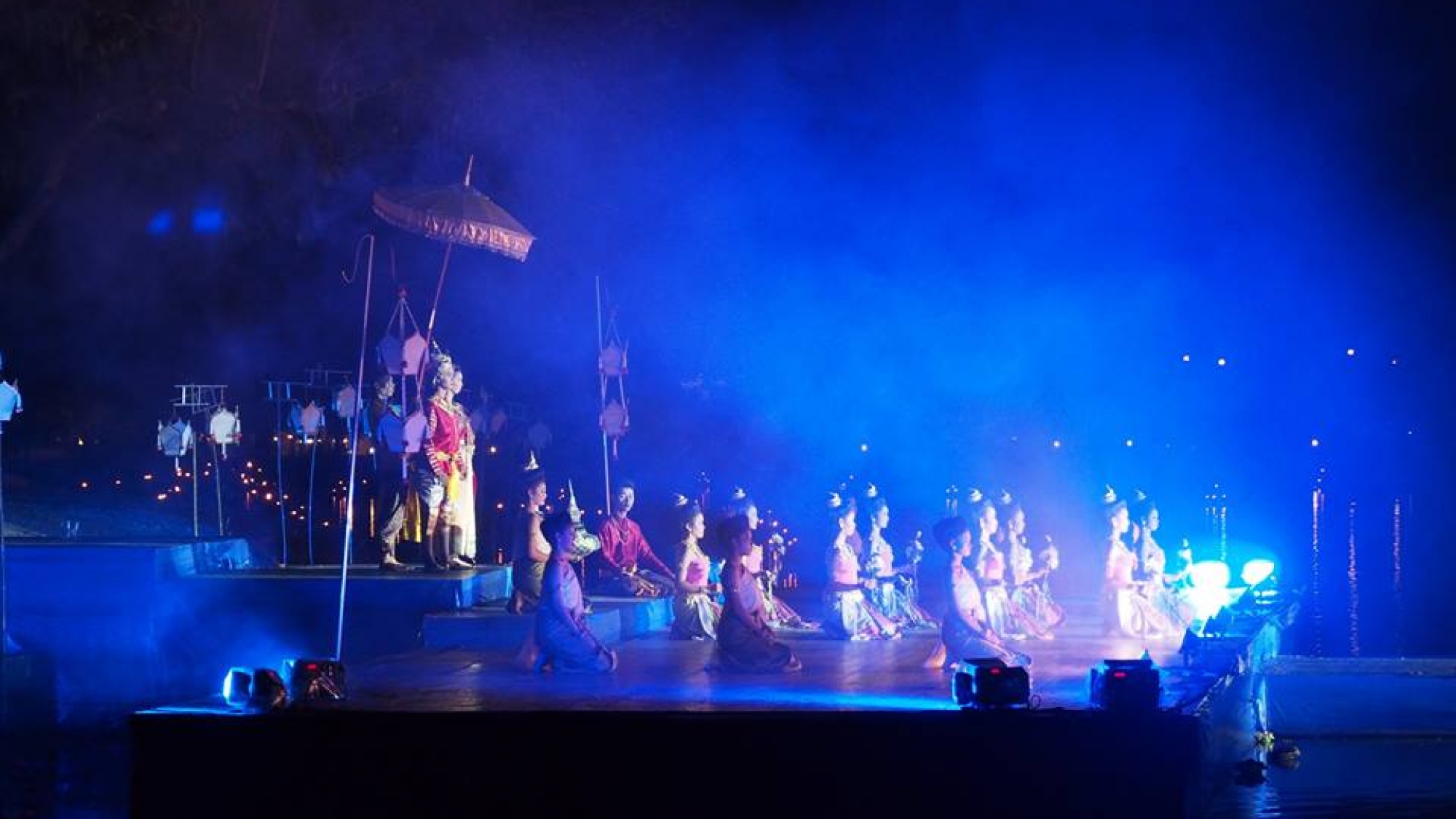
🌕 Die Ursprünge von Loy Krathong
According to Thai folklore, the Loy Krathong Festival traces its origins back to the ancient kingdom of Sukhothai, established in 1238 as one of the most prosperous regions of its time.
Legend tells that in the 14th century, a noble lady named Nang Noppamas, consort of the King of Sukhothai and daughter of a Brahmin priest, crafted the very first decorated krathong. She delicately folded banana leaves into the shape of a lotus flower and adorned it with a candle and incense sticks, adapting an existing Brahmin ritual into what would become a cherished Thai tradition.
The story goes on to say that the king himself lit the candle and incense before floating the krathong upon the waterways surrounding Sukhothai, symbolizing respect to the river goddess and prayers for blessings.
✨ Loy Krathong in Sukhothai Today
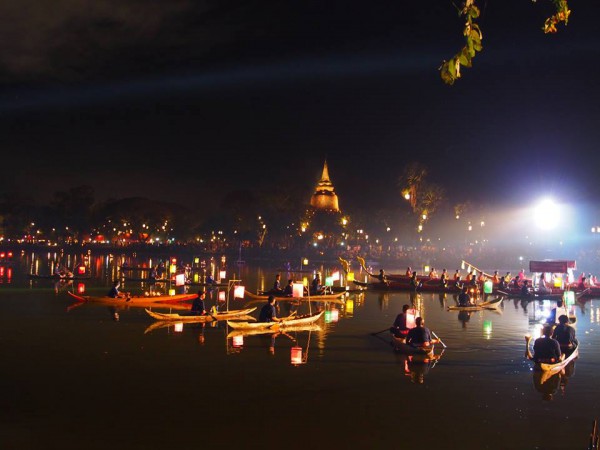
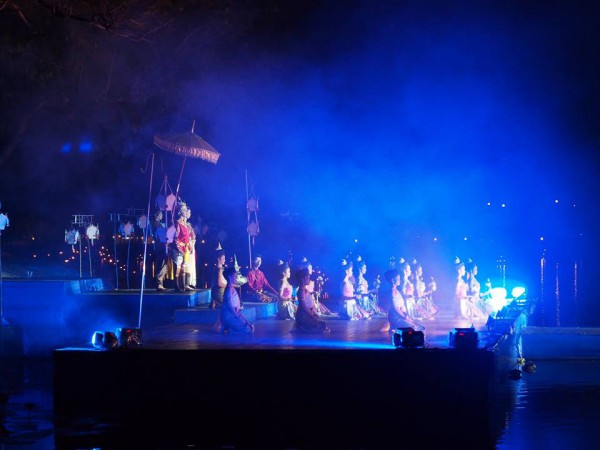
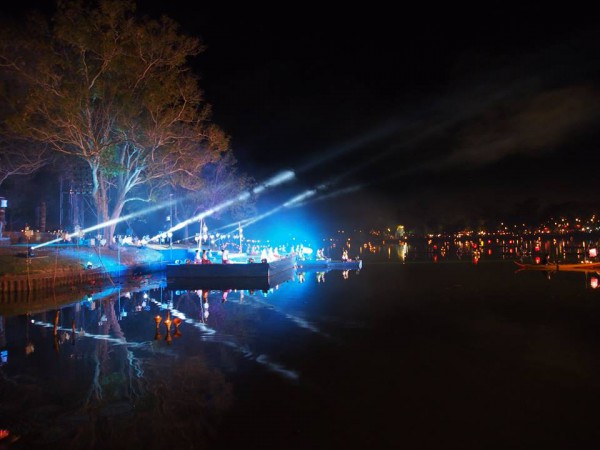
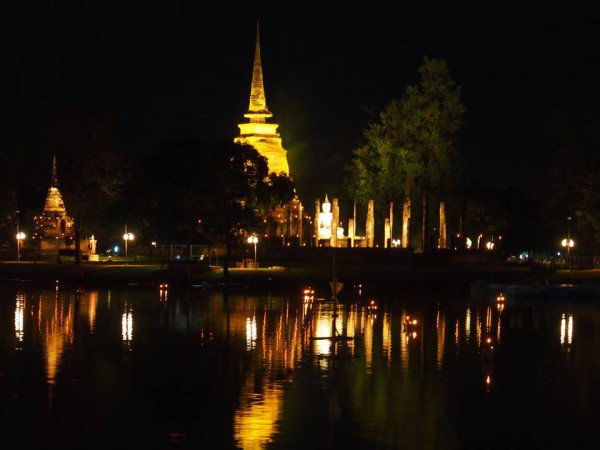
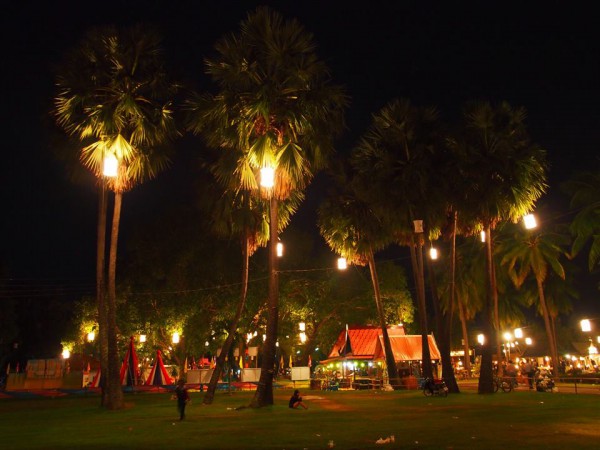
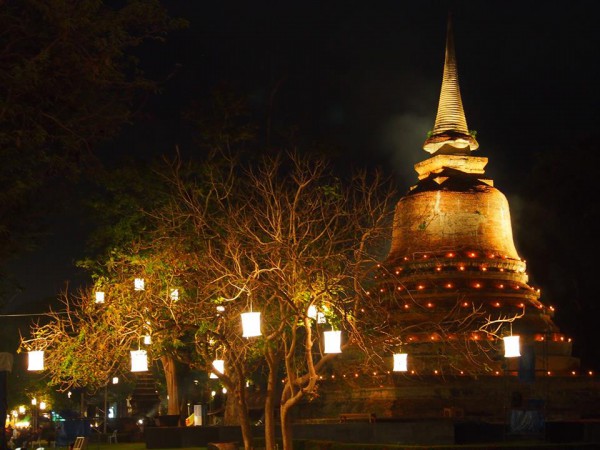
Centuries later, Sukhothai Historical Park continues to be the symbolic heart of the Loy Krathong celebrations. The province proudly hosts the Loy Krathong Light and Candles Festival, where thousands of locals and visitors gather to float their beautifully decorated krathongs. The night sky is illuminated with candles, fireworks, and traditional performances—transforming Sukhothai into a breathtaking scene of light, devotion, and cultural heritage.
Join our trip Nov 2025, Klicken Sie auf „Special Loy Krathong Festival“
🌕 Loy Krathong Light and Candles Festival in Sukhothai
Sukhothai, the kingdom’s ancient capital, proudly hosts the Loy Krathong Light and Candles Festival, drawing thousands of local and international visitors each year. As the symbolic birthplace of the festival, Sukhothai is the first province to officially launch the celebrations—transforming the Sukhothai Historical Park into a dazzling spectacle of lights, tradition, and devotion.
✨ A Celebration Rooted in History
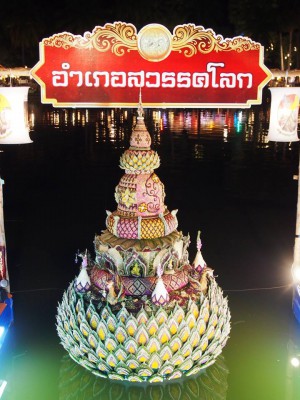
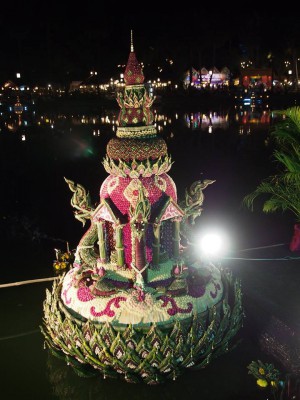
The festivities begin with the ringing of the traditional bell by the governor of Sukhothai, its sound resonating through the ancient ruins of the historical park. From there, the celebrations unfold throughout the day, featuring parades of krathongs (floats) crafted in various designs—most often in the form of colorful lotus flowers.
All nine districts of Sukhothai take part in the parade, each presenting their unique interpretation of the krathong while emphasizing environmentally friendly materials. The parade route passes through historic landmarks, including Wat Channa Songkram, as spectators watch in awe at the artistry and symbolism of the floats.
🎭 Tradition and Cultural Splendor
Beyond the floats, the festival highlights the rich cultural heritage of Sukhothai, believed to be where Loy Krathong was first celebrated in the 13th–14th centuries. Visitors are treated to:
🌺 Cultural processions representing life in ancient Sukhothai.
🎶 Traditional Thai music and performances.
🕺 Folk dancing depicting daily life of Sukhothai’s golden age.
🎭 Khon (masked dance drama) showcasing classic Thai storytelling.
👑 The Noppakao Pageant Contest, celebrating grace and tradition.
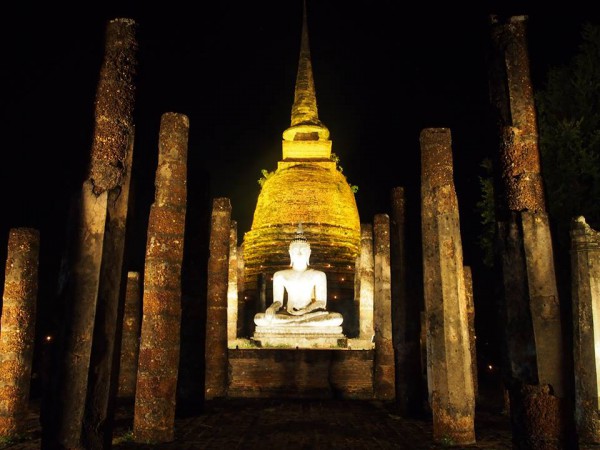
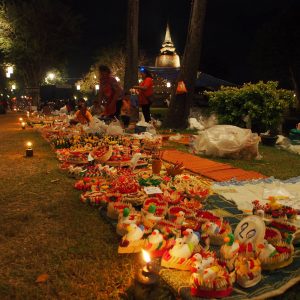
As night falls, the historical park comes alive with flower-shaped floats lit by candles, their glow mirrored on the water, while fireworks light up the sky—a breathtaking finale to one of Thailand’s most enchanting festivals.
Join our trip Nov 2025, Klicken Sie auf „Special Loy Krathong Festival“
🌸 Choose Your Krathong
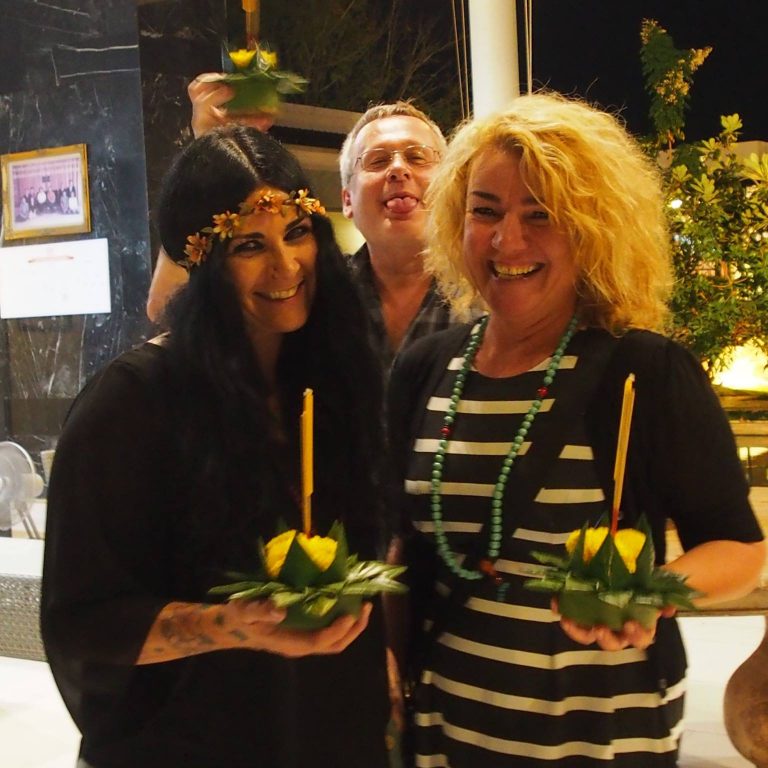
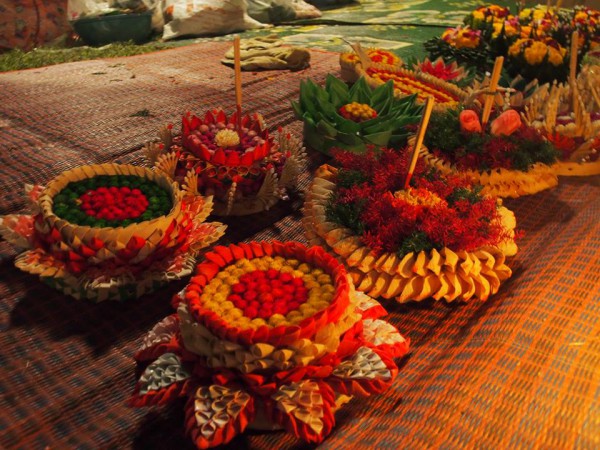
One of the most enchanting aspects of the Loy Krathong Festival is the krathong itself—the delicate floating vessel offered to the water goddess. Some of the most beautiful krathong are crafted from all-natural materials such as banana leaves, tree bark, and fresh flowers, just as they were when the tradition first began centuries ago.
In modern times, krathongs come in many forms. While some unfortunately still use styrofoam, which harms the environment, there has been a strong and positive shift back towards using eco-friendly designs. In Sukhothai, where the waterways are enclosed, any non-biodegradable krathong can be collected and safely disposed of—minimizing the impact on water and wildlife. Sadly, this is not always possible in other parts of Thailand.
The good news is that trends are changing as people become more environmentally conscious. Traditional natural krathongs are making a comeback, and creative, fish-friendly bread krathongs—often shaped like turtles—have become increasingly popular, delighting both festival-goers and the creatures of the waterways.
✨ Choosing a krathong today is not only about beauty but also about sustainability—a way to honor tradition while protecting Thailand’s rivers for generations to come.
Join our trip Nov 2025, Klicken Sie auf „Special Loy Krathong Festival“
AKTIVITÄTEN IN SUKHOTHAI:
🏯 Discover the Historical Splendor of Sukhothai
Sukhothai is a land rich in historical treasures, reflecting the glorious civilization of Thailand’s first capital. Its ancient legacy has been carefully preserved for future generations, allowing visitors to step back in time and experience the grandeur of the Sukhothai Kingdom.
🌟 World Heritage Wonders
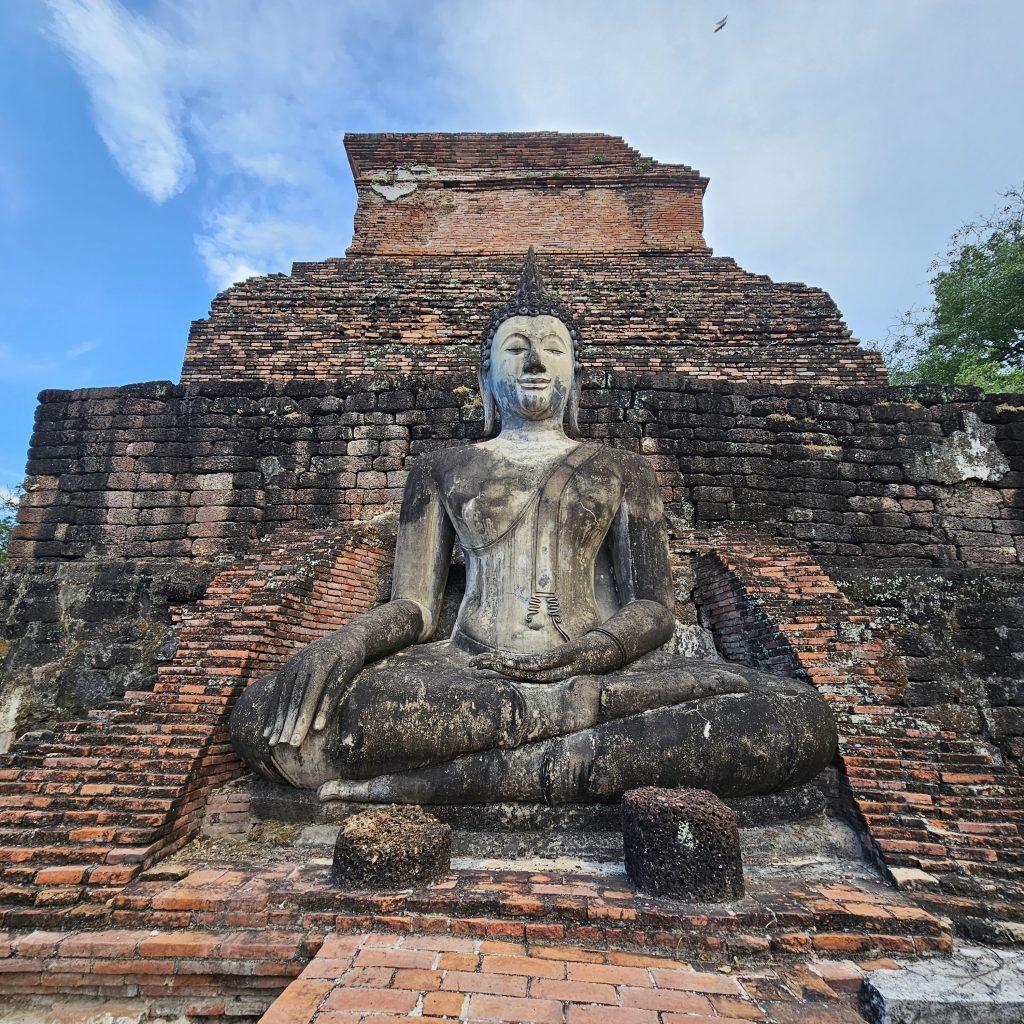
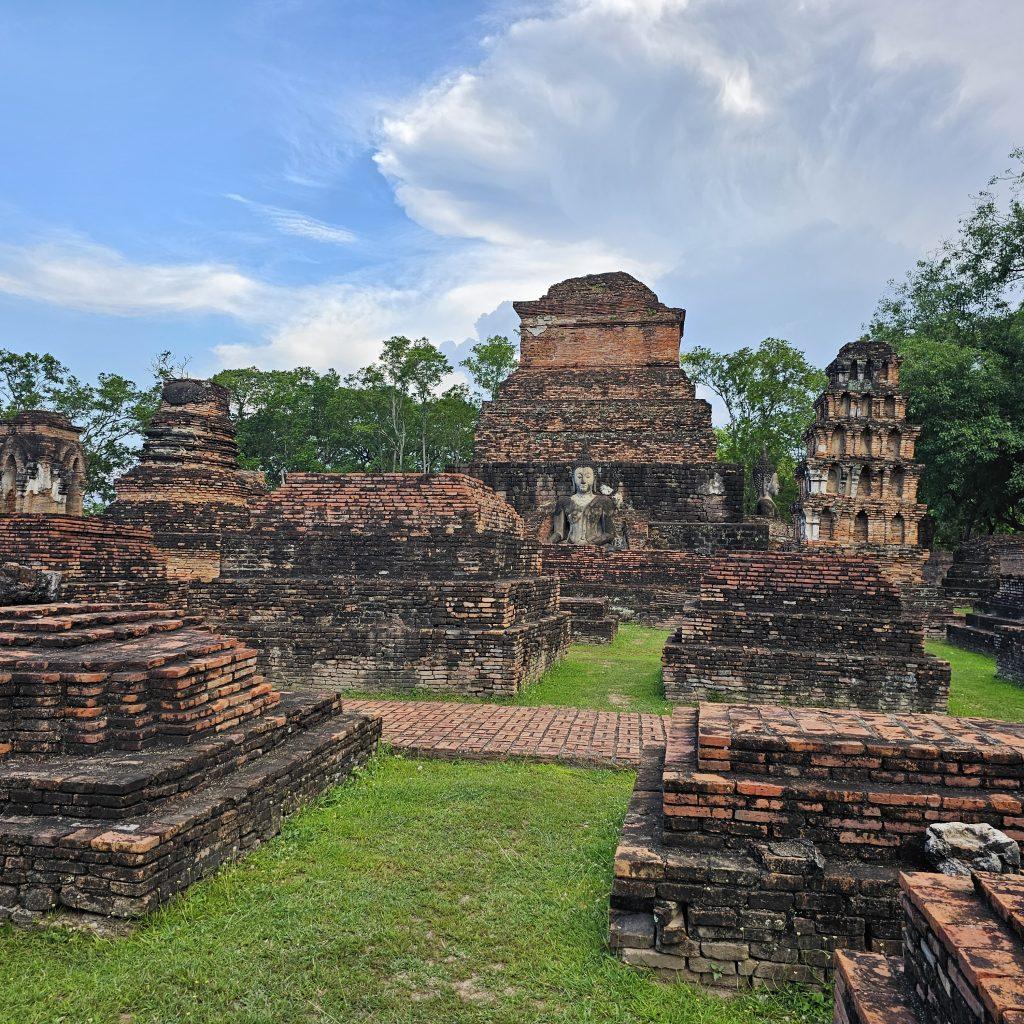
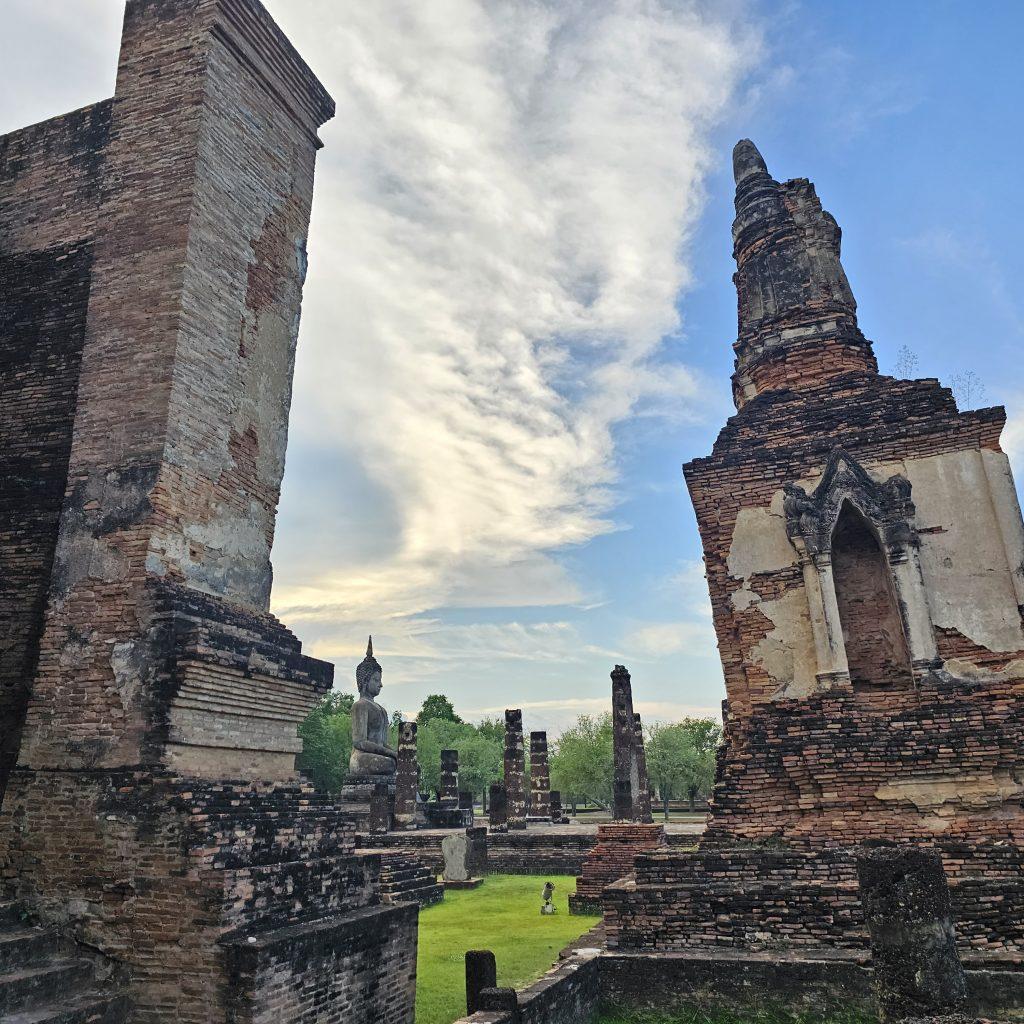
At the heart of the province lies the Sukhothai Historical Park, a UNESCO World Heritage Site. Within its moats and ancient city walls are the remains of royal palaces, temples, and monuments that showcase the artistic brilliance of the 13th and 14th centuries.
Highlights include:
🙏 Phra Achana at Wat Si Chum – the iconic “Speaking Buddha,” enshrined within a mondop whose four remaining walls frame a mysterious and awe-inspiring image.
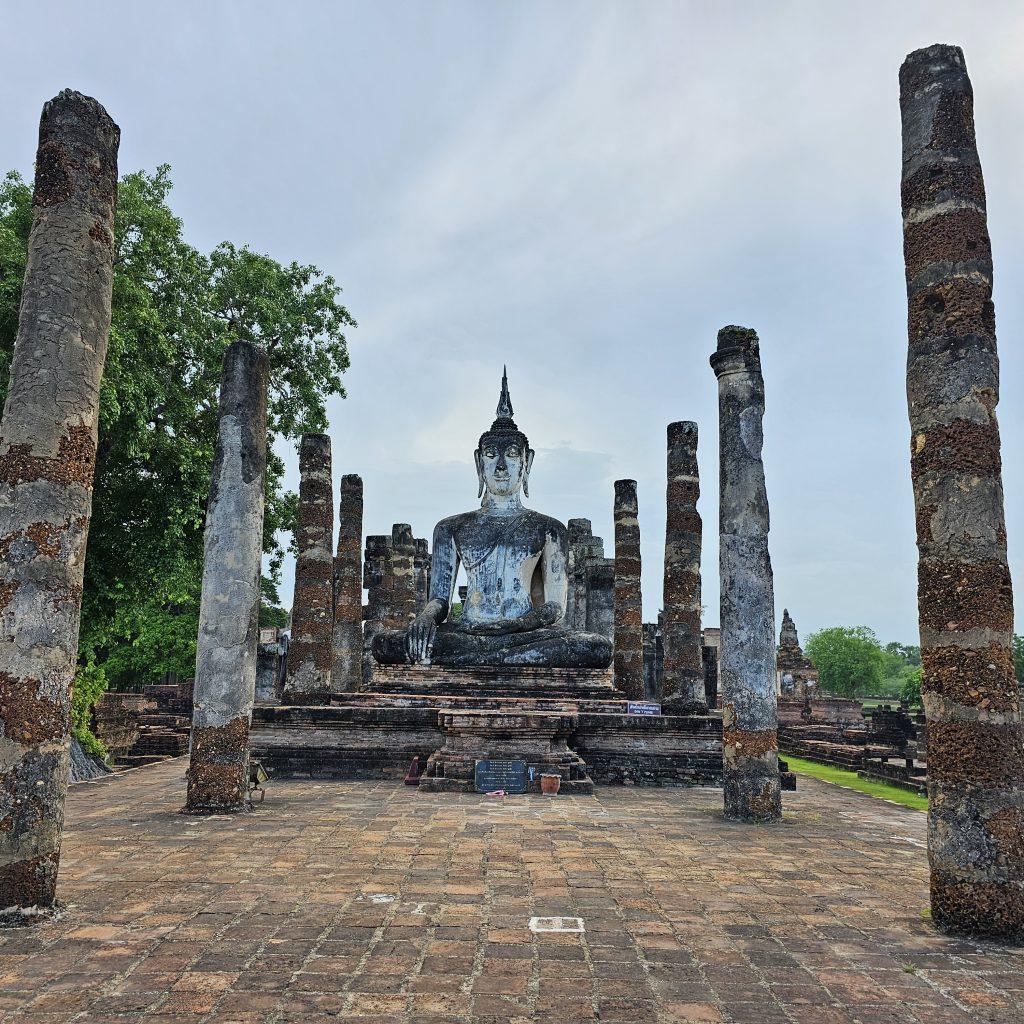
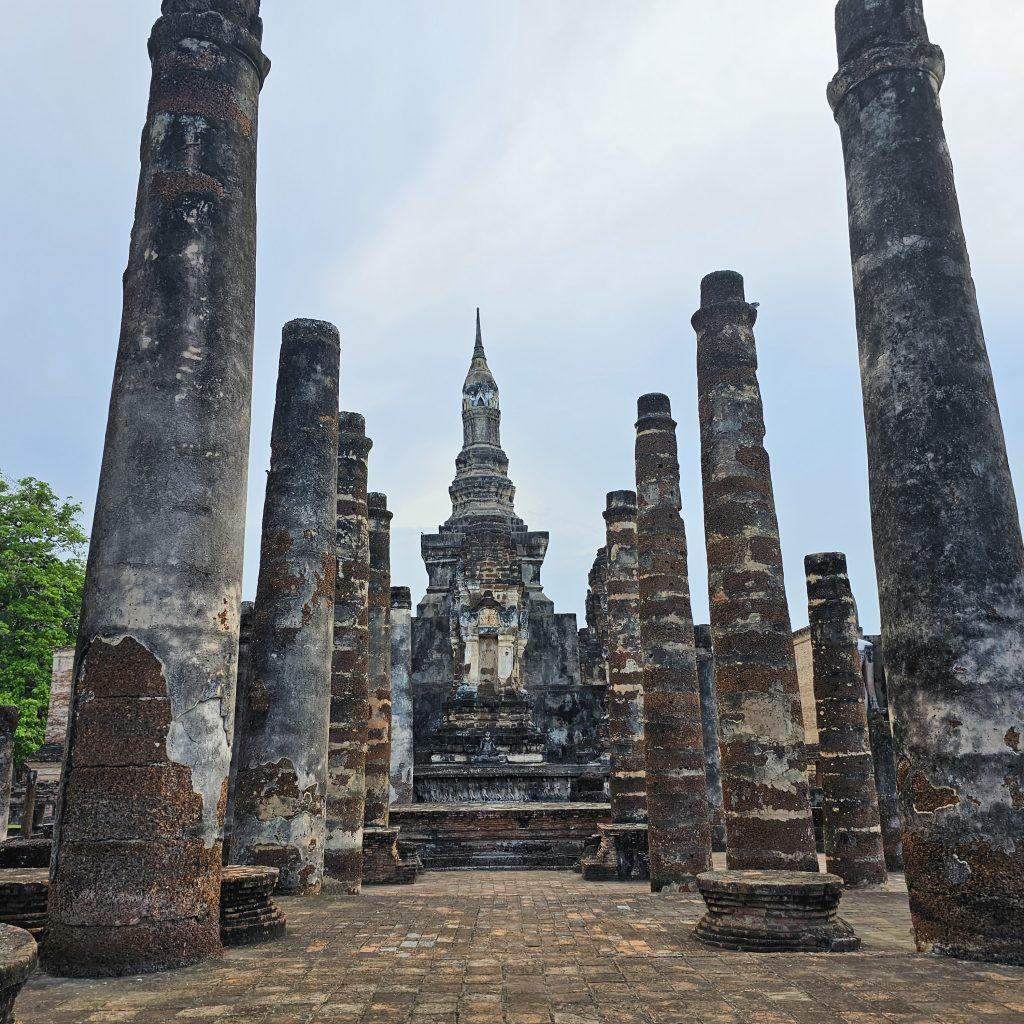
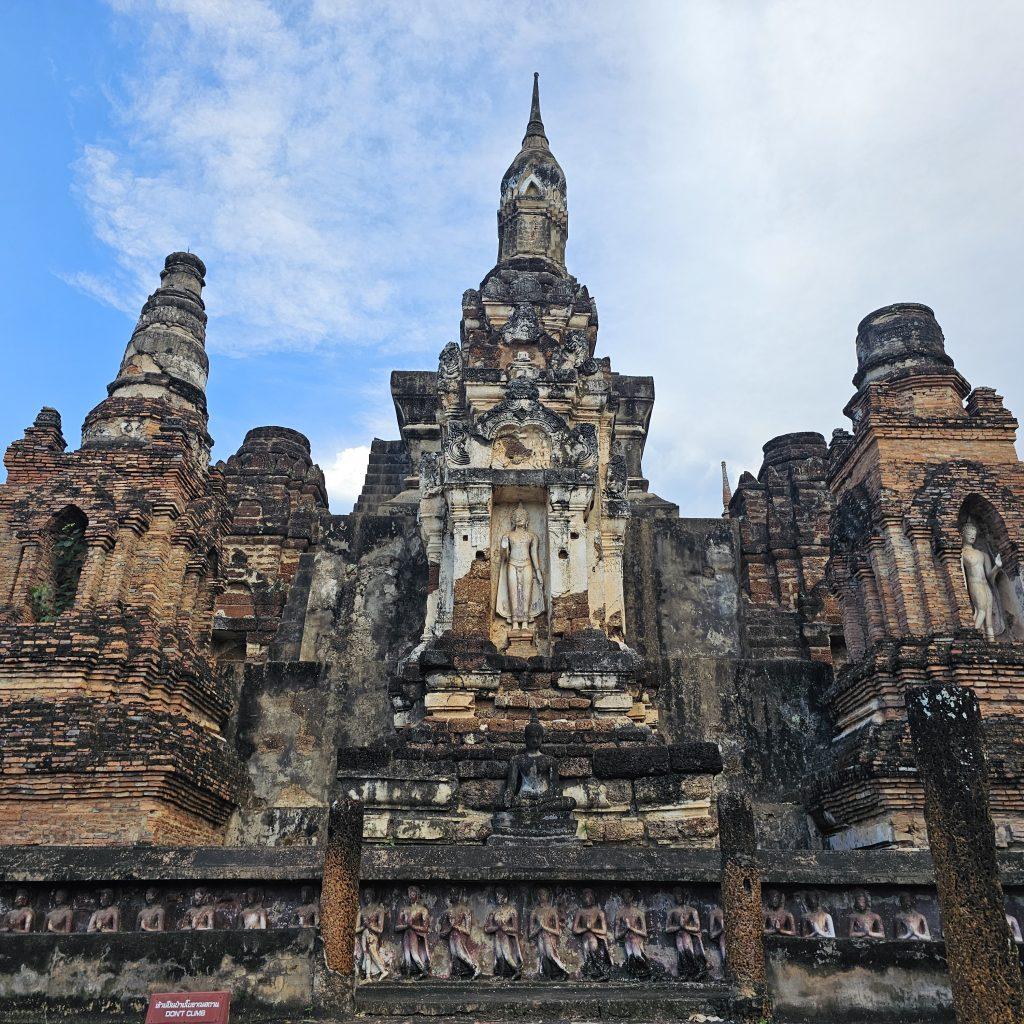
🛕 Wat Mahathat – the spiritual center of Sukhothai, featuring a lotus-bud stupa that represents the unique artistry of the kingdom.
🐘 Wat Chang Lom – known for its stupa encircled by sculptures of elephants.
🌸 Wat Phra Prang – another fine example of Sukhothai’s enduring architectural heritage.
🌿 Beyond the Ancient Capital
Sukhothai is not only about ruins—it is also alive with cultural and natural attractions:
🌳 Thung Saliam District – where visitors can connect with nature while discovering the influence of Lanna civilization.
🍶 Si Satchanalai – famous for its exquisite chinaware, a craft tradition passed down for centuries and celebrated as one of the province’s most valuable cultural heritages.
Visiting Sukhothai is more than sightseeing—it is an immersion into Thailand’s origins, where history, art, and culture come together in harmony.
Join our trip Nov 2025, Klicken Sie auf „Special Loy Krathong Festival“
🏯 Sukhothai – Thailand’s First Capital
Sukhothai was the very first capital of Thailand and, during its golden era, stood as the center of culture, politics, and trade in Southeast Asia. Today, the ruins of this once-glorious city remain as a legacy for future generations—offering stories of the past and lessons in history.
Recognized by UNESCO as a World Heritage Site, the Sukhothai Historical Park preserves this heritage with temples, palaces, and ancient structures that reflect the brilliance of the Sukhothai Kingdom. The park is located opposite the Ramkhamhaeng National Museum, making it a perfect starting point for exploring the region’s history.
🌸 Highlights of the Historical Park
🛕 Wat Mahathat – The spiritual and architectural heart of the park. Its grand central pagoda, surrounded by eight smaller stupas arranged like lotus petals, is a masterpiece of Sukhothai art.
🙏 Phra Attharot – A towering standing Buddha image located at the front gate of Wat Mahathat, radiating serenity and grace.
Visiting Sukhothai is like walking through a living museum—an unforgettable journey back to the golden age of Thai civilization.
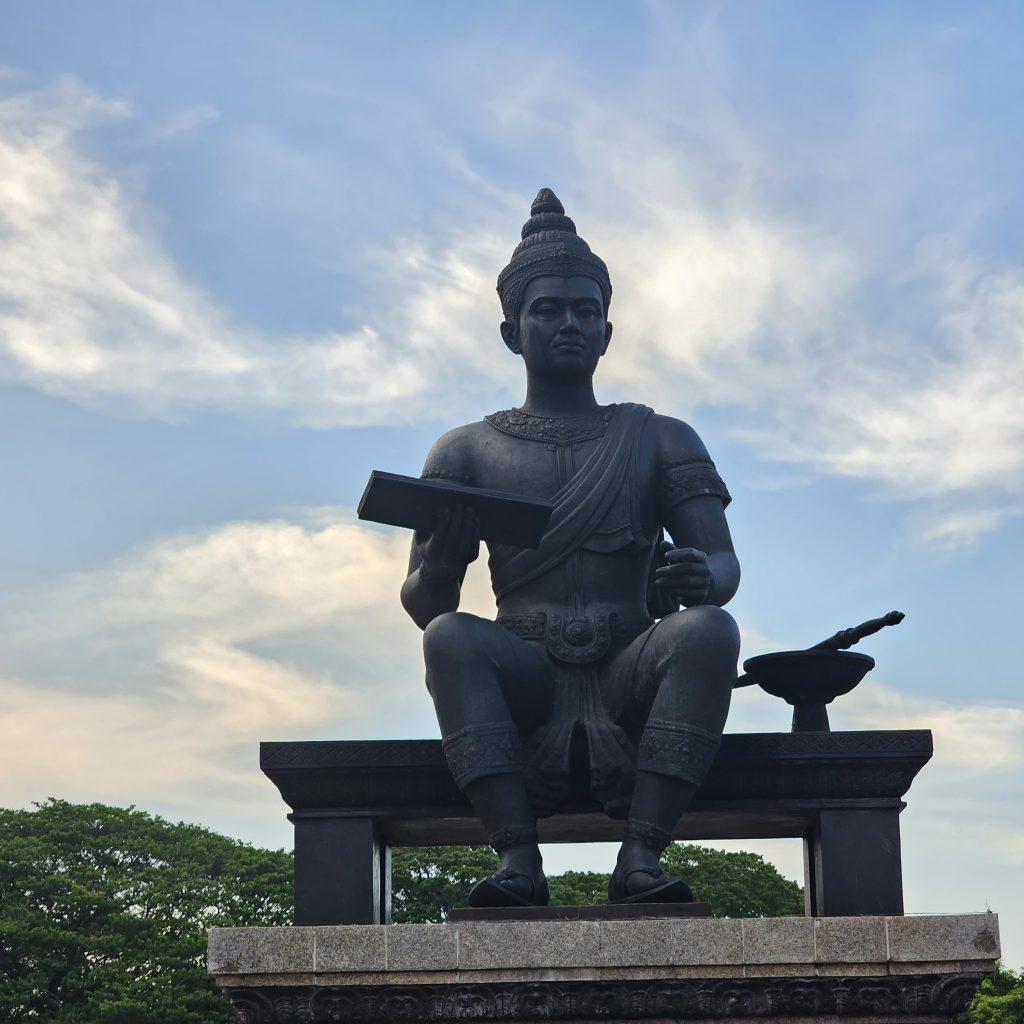
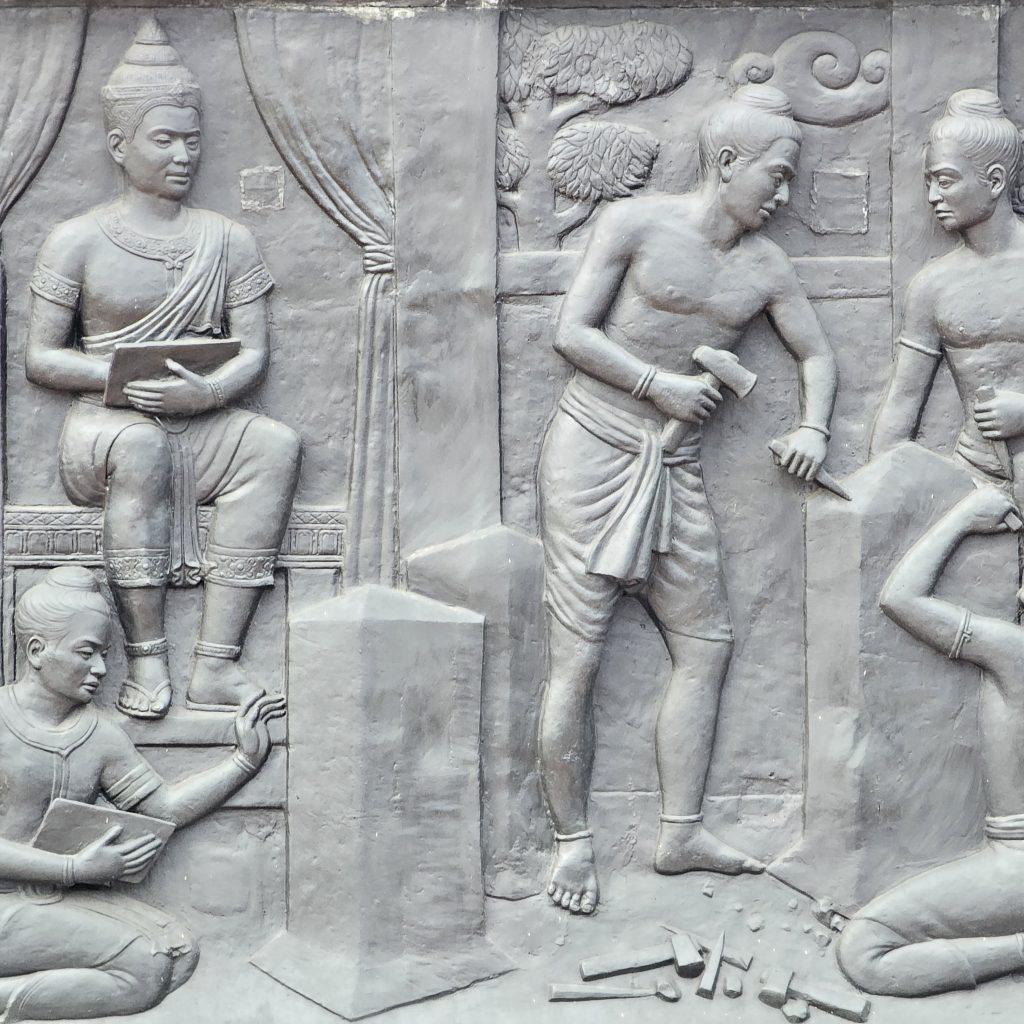
Das Denkmal von König Ramkhamhaeng Dieses Denkmal befindet sich am Ende der Jarod Vitee Tong Road auf der Nordseite von Wat Maha That.
Join our trip Nov 2025, Klicken Sie auf „Special Loy Krathong Festival“
🏯 Exploring the Landmarks of Sukhothai
🛡️ Sukhothai City’s Defensive Wall
The ancient city of Sukhothai was protected by a two-layer defensive wall. The inner wall, built on elevated ground using laterite, served as the main line of defense. The outer layer consisted of a canal paired with a slit wall. Between these two protective barriers stood the city gates and defensive forts, guarding Sukhothai from intruders on all sides.
🛕 Wat Chana Songkram
Located north of Wat Mahathat, this temple is notable for its main pagoda shaped like a giant bell—a striking architectural feature that sets it apart within the historical park.
👑 Prasat Phra Ruang Hill
On the east side of Wat Mahathat lies Prasat Phra Ruang Hill, once the site of a royal palace. This area provides a glimpse into the grandeur of Sukhothai’s royal past.
🌸 Wat Tra Phang Ngearn
To the west of Wat Mahathat stands Wat Tra Phang Ngearn, a temple without surrounding walls. Its highlight is a single lotus-bud style pagoda, reflecting the simple yet elegant artistry of the Sukhothai period.
💦 Wat Sa Sri
Positioned northwest of Wat Mahathat, Wat Sa Sri is unique among the temples in Sukhothai. Built on an island within a reservoir, it features a Ceylonese-style pagoda and a prayer hall surrounded by water—creating a picturesque and tranquil setting.
Join our trip Nov 2025, Klicken Sie auf „Special Loy Krathong Festival“
🏯 Highlights of Sukhothai Historical Park and Beyond
Exploring Sukhothai, Thailand’s first capital, is like walking through a living museum. Within the UNESCO-listed Sukhothai Historical Park and nearby areas, countless temples, shrines, and archaeological sites tell the story of this golden era. Here are some of the must-see landmarks:
🌸 Temples within the Historical Park
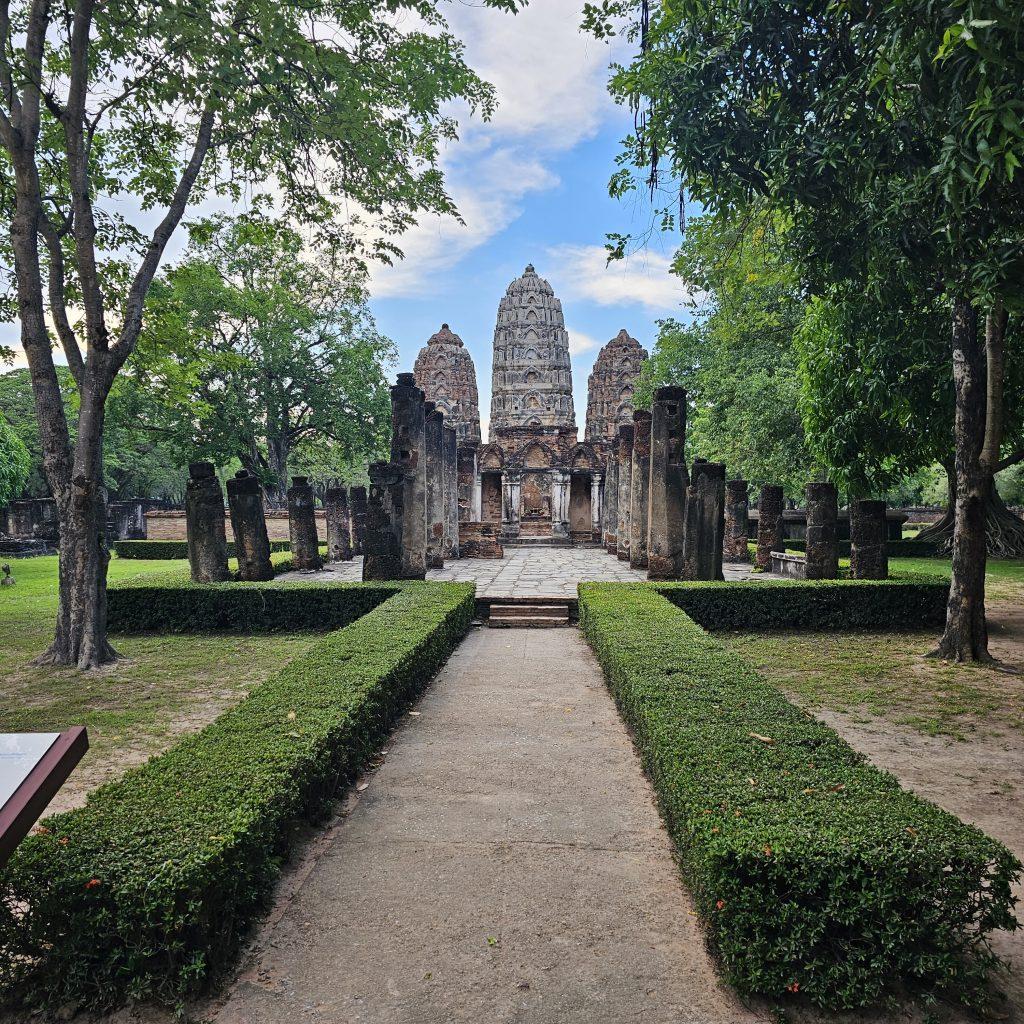
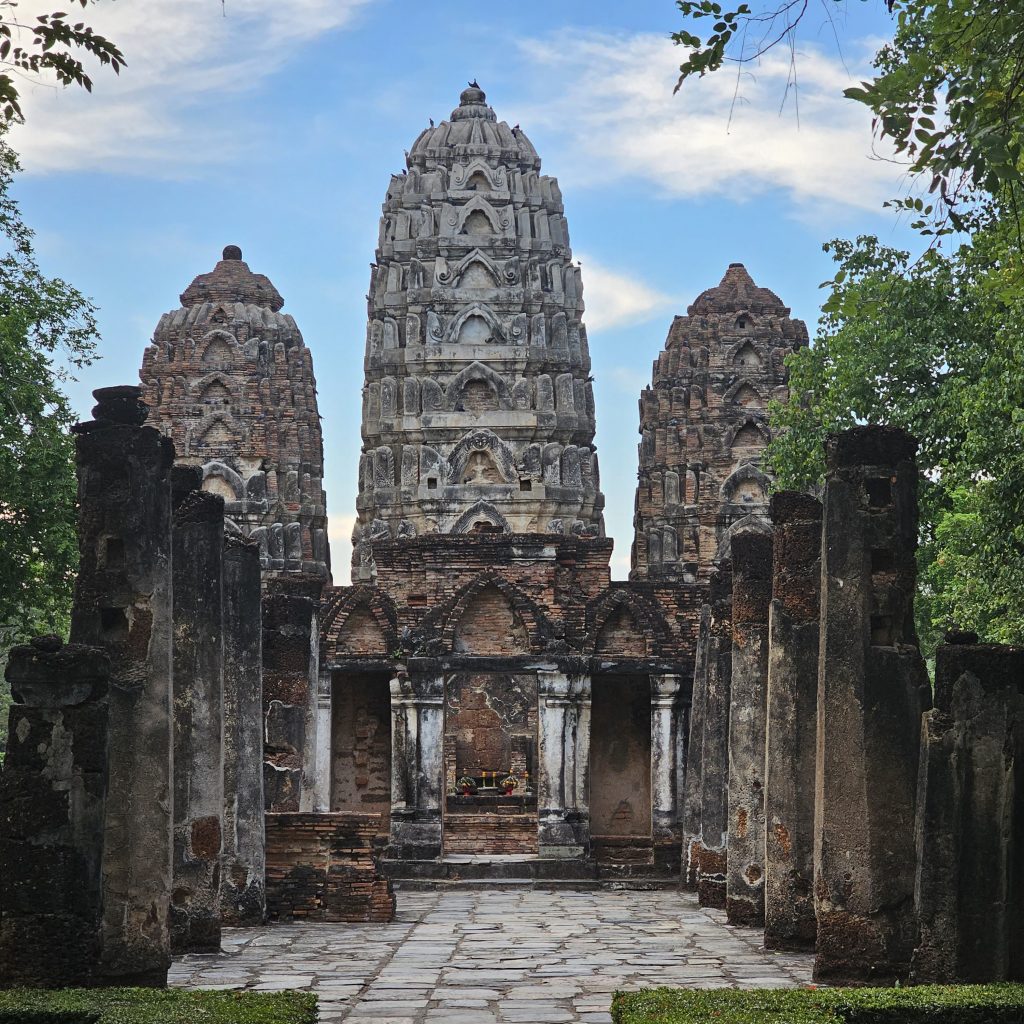
Wat Sri Sawai – Located south of Wat Mahathat, this temple is remarkable for its three pagodas built in Lopburi style, reflecting Khmer influence.
Ta Pha Deang Shrine – An ancient Khmer-style shrine restored by the Fine Arts Department. Relics discovered here are now housed at the Ramkhamhaeng National Museum.
Wat Phra Phai Luang – Considered the second most important temple after Wat Mahathat, it once served as the community’s spiritual center. Its oldest remains are three large pagodas.
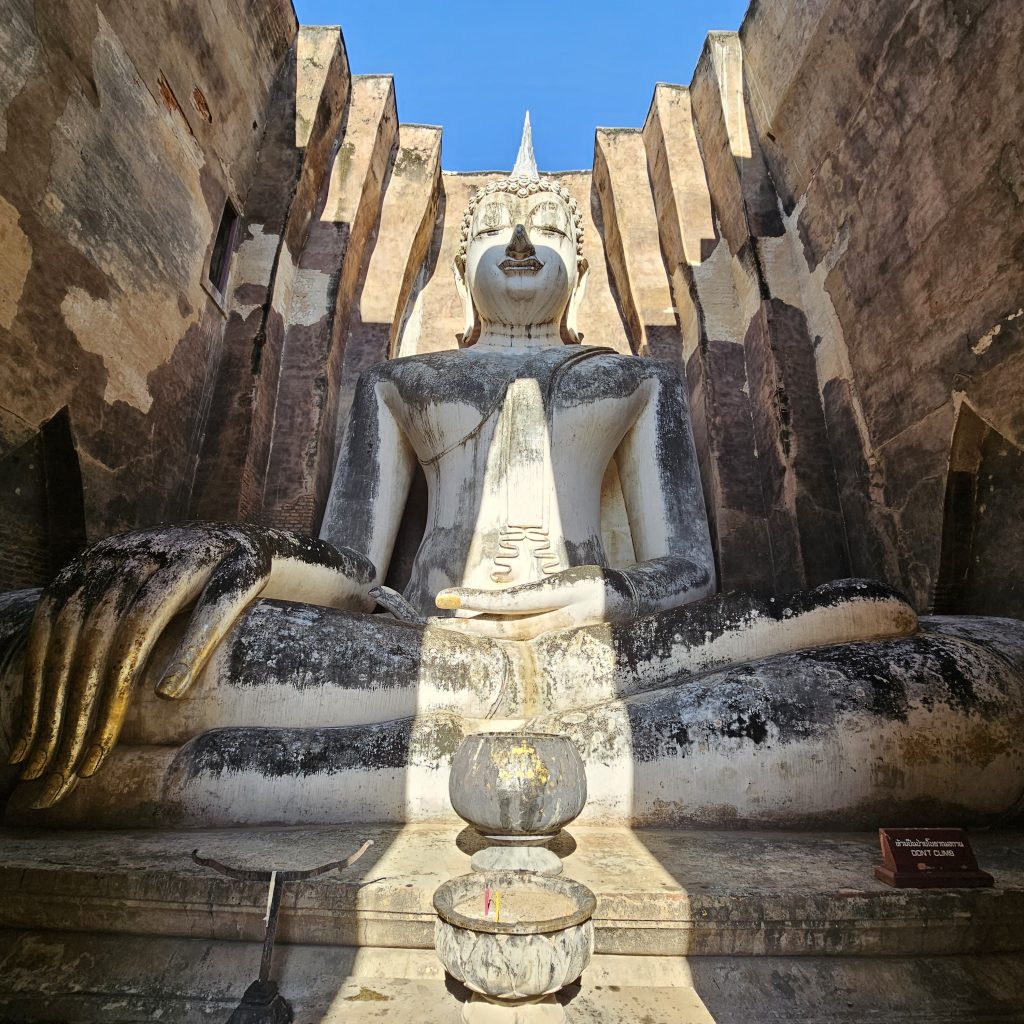
Wat Sri Chum – Famous for housing the monumental Phra Achana Buddha, a seated image over 11 meters tall. Though the temple structure is in ruins, the Buddha statue remains an awe-inspiring sight.
Wat Chang Rob – Situated west of Reed Gate, this temple features a Ceylonese-style stupa surrounded by 24 elephant sculptures at its base.
Wat Chetuphon – Built from brick, laterite, and slate, this sanctuary enshrines four Buddha images in different poses—sitting, reclining, standing, and walking.
Wat Chedi Si Hong – East of Wat Chetuphon, this temple’s Ceylonese stupa is decorated with intricate male and female sculptures around its base.
Wat Saphan Hin – Located on a hill, it houses a towering 12.5-meter standing Buddha in the attitude of meditation, known as Phra Attharot.
Wat Chang Lom – Recognized for its Ceylonese pagoda encircled by half-body elephant sculptures.
Wat Traphang Thong Lang – Features a sanctuary with a Buddha image depicting the story of when the Buddha returned to earth to enlighten his parents.
🏛️ Museums and Learning Centers
Sukhothai Historical Park Tourist Center – Built in Sukhothai-style architecture, it is located in front of Wat Phra Phai Luang and provides information to help visitors appreciate the historical park.
Ramkhamhaeng National Museum – Opposite the Historical Park, displaying invaluable relics from the Sukhothai era.
Sawankhaworanayok National Museum – Another important museum showcasing artifacts from the wider region.
⚱️ Archaeological and Cultural Sites
Sukhothai Pottery Archaeological Site (Mae Joan) – Near Wat Phra Phai Luang, this site reveals kilns from the Sukhothai period where archaeologists found pottery such as cups and bowls.
Si Satchanalai Historical Park – Located in Si Satchanalai district, also recognized as a UNESCO World Heritage Site, with equally impressive ruins and temples.
🌿 Modern Sukhothai
Wat Sopharam – The present-day city temple of Sukhothai province, continuing the spiritual traditions of the region.
Mae Rawing Plain – A beautiful public park by the riverside, perfect for relaxation and leisure.
💧 Ancient Infrastructure
Srid Phong Dam – Built during the old kingdom to store and distribute water through canals, supplying the Gold and Silver Basins within the city walls.
Join our trip Nov 2025, Klicken Sie auf „Special Loy Krathong Festival“
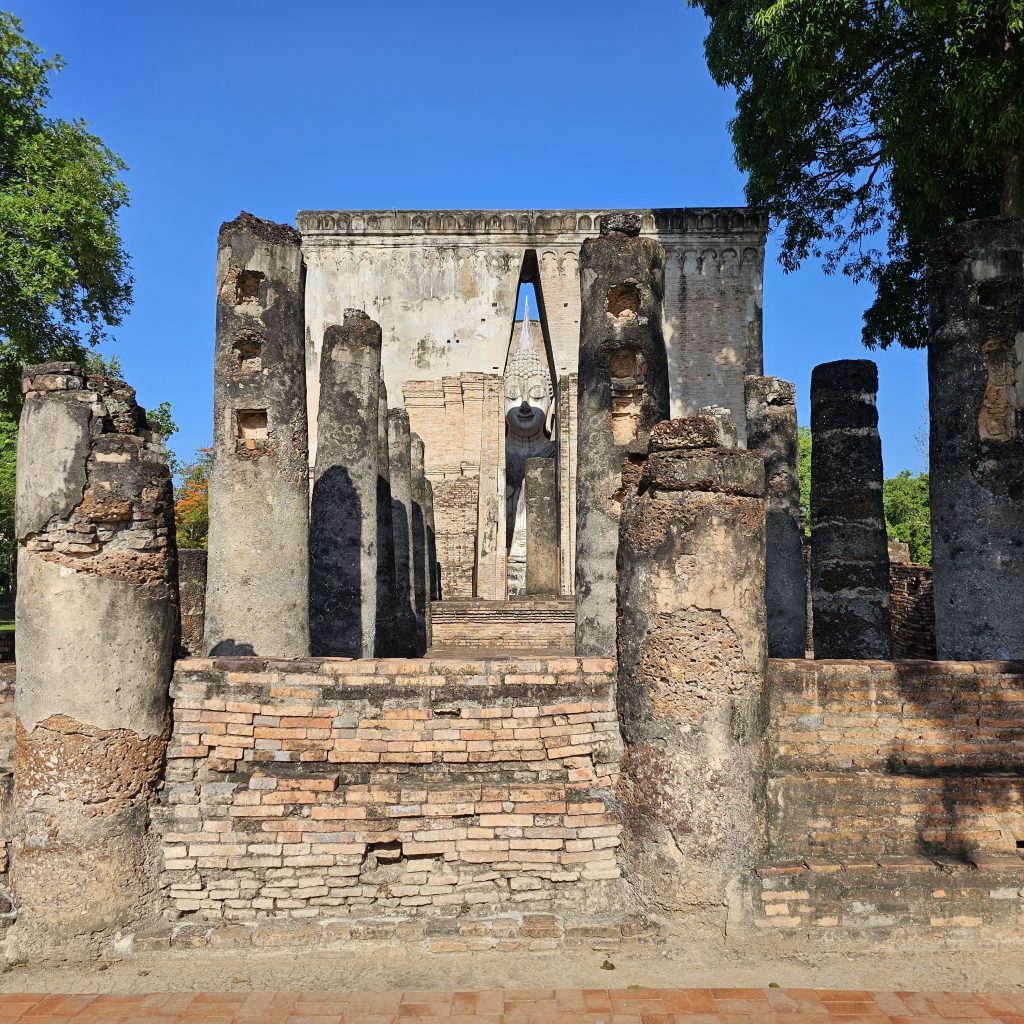
🛕 Wat Si Chum – Home of Phra Achana
Located about 800 meters west of Wat Phra Phai Luang, Wat Si Chum is one of the most iconic and mysterious monuments of the Sukhothai Historical Park.
🌟 The Monumental Phra Achana
At the heart of Wat Si Chum stands a square mondop (main sanctuary) that houses the colossal stucco Buddha image known as Phra Achana, seated in the attitude of subduing Mara. Measuring 11.3 meters wide, this image is among the most monumental in all of Thailand. The name Achana means “one who is unshaken, strong, and without fear,” embodying serenity and strength.
Though the roof has long collapsed, leaving only four towering walls of stuccoed bricks, the sheer size and presence of Phra Achana continue to inspire awe in visitors.
🪷 The Hidden Passageway and Ancient Art
A narrow stairway inside the south wall leads to the upper levels of the structure and to the side of the Buddha image. Along this passage are:
🌿 Faded 700-year-old wall paintings.
🪨 Over 50 engraved slate slabs depicting Jataka tales, providing rare glimpses into early Thai artistic expression.
From the rooftop, visitors are rewarded with a panoramic view of the ancient city of Sukhothai, making the climb a memorable experience.
🕊️ The Mystery of Wat Si Chum
Wat Si Chum is also steeped in legend. It is said that the kings of the Phra Ruang Dynasty used this temple to inspire and encourage their soldiers. By speaking through a hidden passage and small hole in the wall, they created the illusion that the Buddha himself was addressing the people—instilling courage and morale before battles.
With no windows and only faint traces of what may once have been a vaulted roof, the temple still radiates mystery and sacred power, standing as a timeless symbol of the spiritual strength of Sukhothai.
Join our trip Nov 2025, Klicken Sie auf „Special Loy Krathong Festival“
 German
  English